How to Tell If Your Roof Needs Replacing: 8 Warning Signs Every Homeowner Should Know
Learn how to tell if your roof needs replacing with 8 key warning signs every homeowner should know. Free inspections available.
Your roof is one of the most important investments in your home, and also one of the easiest to overlook. Most homeowners don't think about their roof until a leak shows up on the ceiling or a shingle blows onto the lawn. By then, the damage is often far more extensive than it needed to be. Knowing how to tell if your roof needs replacing before a small issue turns into a major one can save thousands of dollars and protect everything beneath it.
At Avondale Roofing, we have inspected and replaced thousands of roofs across Illinois and Wisconsin since 1988. Over 35+ years, our team has seen every warning sign a roof can show, and we know exactly what to look for. This guide walks you through the eight most important signs that your roof may need to be replaced, and what to do when you spot them.
Why Catching the Warning Signs Early Matters
Illinois and Wisconsin roofs take a beating. Between summer hailstorms, heavy snow loads, freeze-thaw cycles, and high winds off Lake Michigan, the average roof in our region works harder than roofs in milder climates. According to the National Association of Home Builders, a typical asphalt shingle roof lasts 20 to 30 years under normal conditions, but in harsh climates like ours, that lifespan can be significantly shorter.
Catching problems early means you can plan your replacement on your terms, budget for it comfortably, and avoid emergency repairs or interior damage. Here are the eight warning signs to watch for.
8 Warning Signs Your Roof Needs Replacing
1. Your Roof Is 20+ Years Old
Age is the single most important factor in determining whether your roof needs to be replaced. Even a roof that looks fine from the ground may be at the end of its structural life. If your roof is approaching or past the 20-year mark, schedule a professional inspection, even if you haven't noticed any obvious damage yet. Older roofs lose their protective capabilities gradually, often without visible warning signs.
2. Curling, Cracked, or Missing Shingles
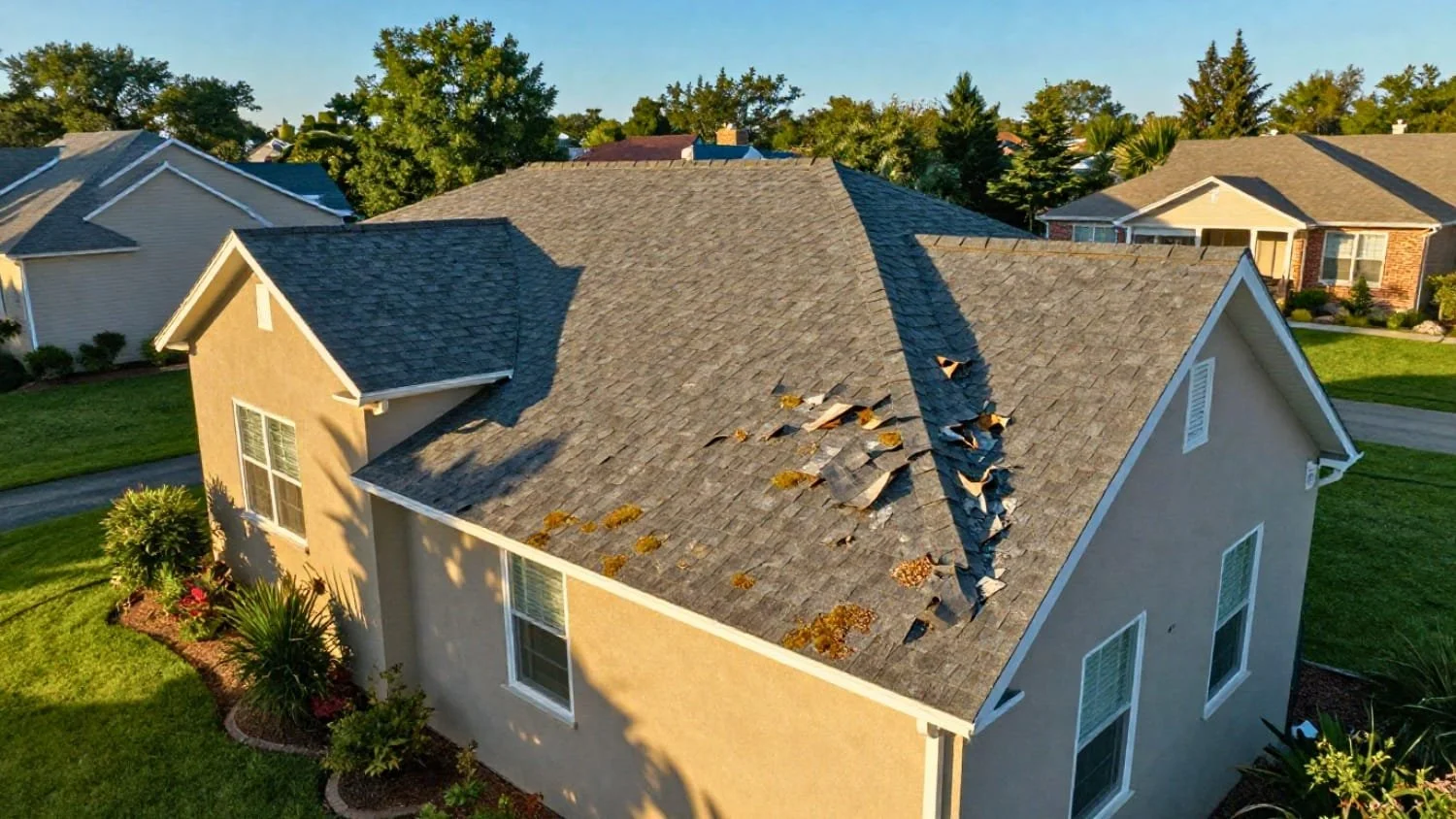
Shingles are designed to lay flat and interlock with one another to form a water-tight barrier. When you start seeing shingles that are curling at the edges, cracked, or missing entirely, that barrier is compromised. A few isolated damaged shingles can often be repaired, but if the damage is widespread across multiple sections of the roof, replacement is usually the better investment.
Walk around your home and look up at the roof from multiple angles. Pay special attention to areas that face south or west, these get the most sun exposure and typically show wear first.
3. Granules in Your Gutters
Asphalt shingles are coated with protective granules that shield them from UV rays and weather damage. As shingles age, these granules begin to wash off and collect in your gutters. A small amount is normal, especially on a newer roof, but if you see large amounts of granules, or notice bare spots on your shingles where the granules have worn away, your roof is losing its protective layer and nearing the end of its lifespan.
4. Sagging Rooflines
A sagging roofline is one of the most serious warning signs a homeowner can spot. It indicates that the underlying roof deck or structural supports may be weakened by water damage, rot, or excessive weight. Walk across the street and look at your roof from a distance. If you notice any dips, waves, or uneven sections along the ridgeline, call a professional contractor immediately. Sagging roofs can fail without warning and require urgent attention.
5. Water Stains or Leaks Inside Your Home
Brown spots on ceilings, water stains along interior walls, or damp patches in the attic all point to the same thing: water is getting past your roof. Even a small leak is a sign that your roof's protective layers have failed somewhere. While a single leak might be repairable, multiple leaks or recurring water damage usually mean the roof has reached the end of its useful life and needs to be replaced.
Check your attic after heavy storms with a flashlight. Look for water stains on the underside of the roof deck, damp insulation, or visible daylight coming through the roof boards.
6. Damaged Flashing Around Chimneys, Vents, or Skylights
Flashing is the thin metal material installed around roof penetrations, chimneys, vents, skylights, and valleys, to prevent water intrusion. When flashing cracks, rusts, separates, or lifts away from the roof, water has an easy path into your home. Damaged flashing in a few small spots can sometimes be repaired, but widespread flashing failure often accompanies an aging roof and signals it's time for a full replacement.
7. Moss, Algae, or Visible Rot
Moss and algae are more than just cosmetic issues. They trap moisture against the roof surface, accelerating shingle deterioration and creating conditions for wood rot underneath. Illinois and Wisconsin homes with shaded roofs are particularly prone to moss growth due to our humid summers. While mild algae can sometimes be cleaned, extensive moss growth, especially paired with soft spots or visible rot, usually indicates structural damage that requires replacement.
8. Rising Energy Bills
A surprising number of homeowners don't realize their roof affects their energy bills. When a roof's ventilation or insulation barrier breaks down, conditioned air escapes and outdoor temperatures seep in. If your heating and cooling costs have climbed without explanation, a failing roof could be the culprit. A new, properly installed roof with modern ventilation can meaningfully improve your home's energy efficiency, an especially valuable benefit during Midwestern winters.
Repair or Replace? How to Decide
Not every warning sign means your roof needs to be completely replaced. In many cases, localized damage can be repaired if the rest of the roof is in good shape. Here's a simple way to think about the decision:
Repair is often the right call when damage is isolated, the roof is less than 15 years old, and the rest of the structure is sound. Learn more about our residential roof repair services.
Replacement is usually the better investment when your roof is 20+ years old, multiple warning signs are present, or repairs would cost more than 30% of a full replacement.
When in doubt, a professional inspection is the fastest way to get a clear answer. Our guide on when to repair vs. replace a roof walks through the cost-benefit analysis in more detail.
What to Do If You Spot Warning Signs
If you notice any of the warning signs above, follow these steps to protect your home and make an informed decision:
Document what you see. Take photos from the ground and note any interior damage.
Avoid climbing on the roof. Older or damaged roofs can be dangerous to walk on.
Schedule a professional inspection. A qualified contractor can assess the full scope of damage and recommend the right course of action.
Get a written estimate. Any reputable contractor will provide detailed documentation and pricing.
Consider your timing. If replacement is needed, plan around favorable weather and your budget rather than waiting for an emergency.
Avondale Roofing offers free, no-obligation roof inspections throughout Illinois and Wisconsin. As a GAF Master Elite and GAF President's Club certified contractor, a distinction earned by less than 2% of roofing companies nationwide, our inspections give you a clear, honest assessment of your roof's condition and the options available to you.
Why Illinois and Wisconsin Homeowners Trust Avondale Roofing
Roof replacement is a major investment, and the contractor you choose matters as much as the materials. When you work with Avondale Roofing, you get:
35+ years of experience serving Illinois and Wisconsin homeowners since 1988
GAF Master Elite and President's Club certification, the highest honors in residential roofing
Comprehensive residential and commercial roofing services, tailored to Midwestern weather
Free, no-obligation inspections with transparent pricing and honest recommendations
Local knowledge of the specific challenges facing Illinois and Wisconsin homes
Full-service residential roofing for repairs, replacements, and new installations
We treat every home like it's our own, because protecting what matters most to our neighbors is what we've built our reputation on.
Schedule Your Free Roof Inspection Today
If you've noticed any of these warning signs, or simply want peace of mind knowing your roof is in good shape, don't wait for a small issue to become a major problem. Contact Avondale Roofing today for a free, no-obligation roof inspection. Our certified team will evaluate your roof, walk you through the findings, and help you make the right decision for your home.
Call us at 855-819-ROOF (7663) or schedule your free inspection online. Avondale Roofing, the trusted name in Illinois and Wisconsin roofing since 1988.