
Gutters, Siding, and Exterior Systems for Midwest Homes: What Works Together
Seamless gutters are the recommended gutter type for homes in Illinois and Wisconsin. Unlike sectional gutters, seamless gutters are formed on-site from a single coil of aluminum, which dramatically reduces the number of joints that can fail during freeze-thaw cycles. Combined with the right siding, fascia, and soffit, they form a water-management system built to handle Midwest winters.
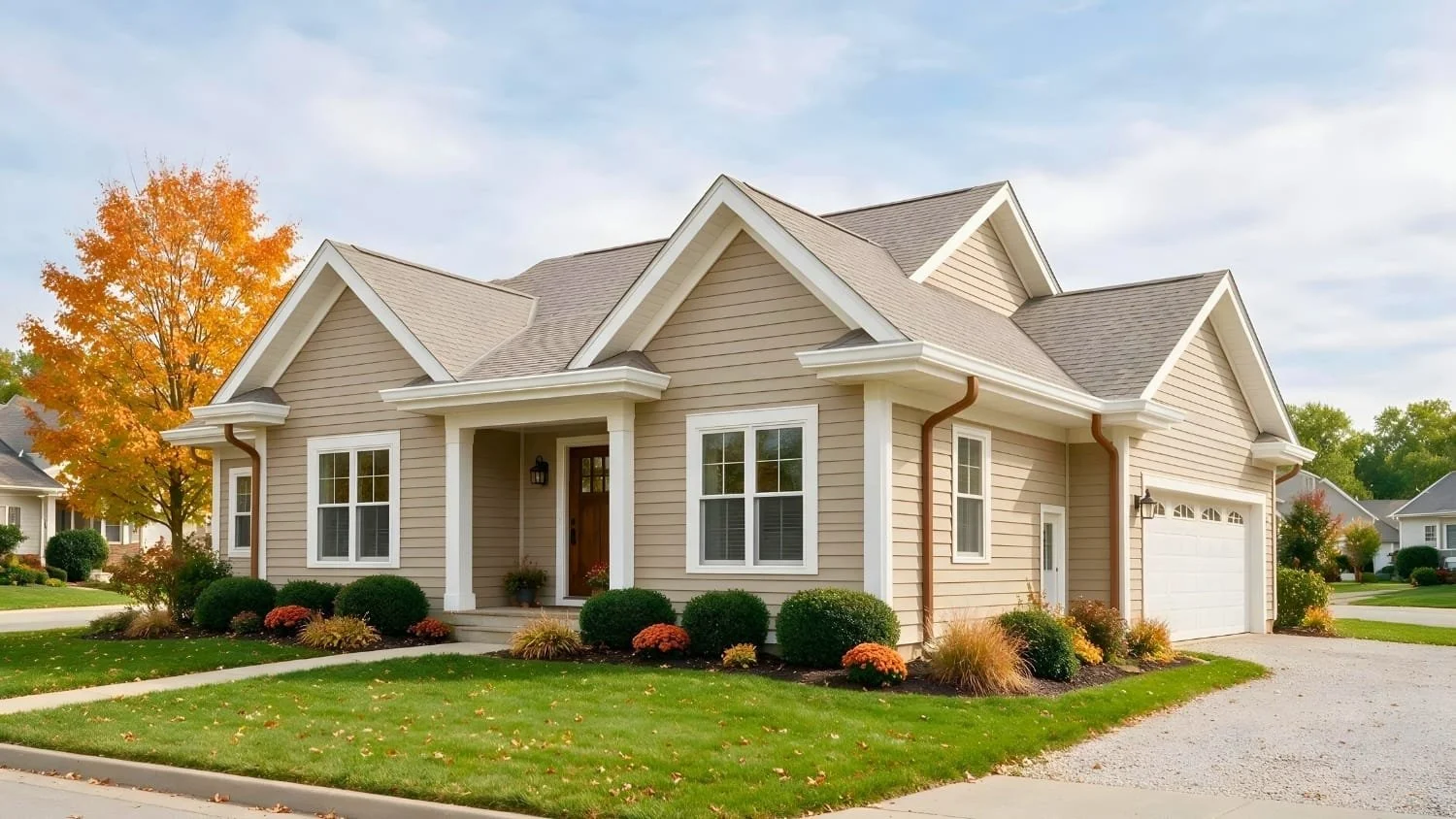
A gutter that handles a July downpour can still fail in February. Water backs up under ice, freezes, and pries the fascia loose. That single detail explains why hiring a seamless gutters and siding contractor in Illinois and Wisconsin is different from hiring one in Georgia. Our winters set the rules.
This guide covers how gutters, siding, soffit, fascia, and roof edge work as one water-management system. You'll get material comparisons for our climate, real questions to ask before you sign, and straight guidance on what to fix first when the budget won't stretch to everything.
Why Do Gutters and Siding Fail Together on Midwest Homes?
Most exterior failures in Illinois and Wisconsin start at the handoff points between trades. Water leaves the roof, hits the gutter, runs to a downspout, and lands somewhere. Every one of those transitions is a potential failure point.
Picture a home in Delavan with new vinyl siding and 20-year-old sectional gutters. The gutters overflow at the seams during heavy rain. Water sheets down the wall, gets behind the siding at a poorly flashed corner, and soaks the sheathing. The siding looks fine from the street for three or four years. Then the paint on the interior wall starts bubbling.
Replacing siding without correcting the drainage is like patching a ceiling while the pipe still leaks. The reverse is equally true. New gutters bolted to rotten fascia will sag within two seasons, because the fasteners have nothing solid to bite into.
So when quoting exterior work, a thorough contractor looks at the whole edge of the house: roof edge and drip edge, fascia board, soffit venting, gutter and downspout sizing, then the siding and its flashing. Fix the sequence wrong and you pay twice.
Why Do Seamless Gutters Outperform Sectional Gutters in Illinois and Wisconsin?
Seamless gutters outperform sectional gutters in Midwest climates because they eliminate the seam joints that fail most often during freeze-thaw cycles. Sectional gutters join every 10 feet with a lapped seam and sealant. Sealant flexes with temperature. Northern Illinois and Southern Wisconsin swing through freeze-thaw cycles dozens of times each winter, and every cycle works that joint a little looser.
Seamless gutter is formed on-site from a coil of aluminum, run out in one continuous piece per side of the house. Corners and outlets are still joints, but the number of failure points drops dramatically. Fewer joints means fewer leaks and less streaking on your siding.
There is a cost difference. Seamless costs more per foot than the sectional gutter you would buy at a big-box store, mostly because of the on-site machine and the crew running it. Over a 20-year window, the math usually favors seamless, since sectional gutters in this climate tend to need resealing and re-hanging well before then. The breakdown of how seamless and traditional gutters compare on durability walks through the tradeoffs in more detail.
One thing seamless does not fix: undersized gutters. A 5-inch K-style gutter is standard on most homes. If you have a large steep roof, long unbroken runs, or valleys that dump a lot of water into one spot, you want 6-inch gutter with 3x4 downspouts. Going up one size roughly doubles the water a gutter can move. That matters more here than almost any other upgrade, because spring rains in Illinois and Wisconsin come hard and fast.
Which Gutter Material Works Best in Illinois and Wisconsin Winters?
For most Illinois and Wisconsin homes, .032-gauge aluminum is the default recommendation. It is stiff enough to handle snow load, resistant to rust, and holds up through decades of freeze-thaw cycles without cracking. Here is how all the common options compare.
| Material | Cold-weather behavior | Typical lifespan | Best fit |
|---|---|---|---|
| Aluminum (.027 gauge) | Won't rust; dents from ice and ladders | Around 20 years | Budget seamless installs on sheltered homes |
| Aluminum (.032 gauge) | Noticeably stiffer under snow load | 20–30 years | Most Midwest homes; default recommendation |
| Galvanized steel | Very strong; rusts at cut edges over time | 15–25 years | Homes with heavy ice buildup or tree fall |
| Copper | Excellent; no rust, handles ice well | 50+ years | Historic homes in places like Lake Forest and Highland Park |
| Vinyl | Turns brittle in deep cold; cracks | Under 10 years | Sheds and detached garages, not main homes |
Skip vinyl gutters on a house in Wisconsin. They go stiff below zero and split when ice loads them. This pattern shows up every spring without fail.
The gauge question is worth pressing your contractor on. Thicker aluminum costs a little more per foot and holds its shape far better when a slab of ice slides off the roof. If a quote does not state the gauge, ask. A vague spec sheet usually means the cheaper option.
What Installation Specs Determine Whether Seamless Gutters Last?
Two crews can install the same seamless gutter and get very different results. The difference comes down to three details.
Hanger spacing. Hidden hangers screwed into the fascia should sit every 24 inches, and closer than that under valleys or in areas with real snow load. Some crews stretch spacing to 36 inches to save time and hardware. That gutter will sag.
Pitch. A gutter needs about a quarter inch of fall for every 10 feet so water moves to the downspout. Too flat and you get standing water, which freezes into a solid block. Too steep and it looks crooked from the curb.
Downspout placement and discharge. One downspout per 30 to 40 feet of gutter is a reasonable baseline, adjusted for roof area. Extensions should carry runoff at least four feet from the foundation, farther on a flat lot. Dumping water beside the wall is how basements get wet.
If a gutter estimate doesn't mention gauge, hanger spacing, or downspout count, it isn't a real estimate. It's a number.
Where Do Ice Dams Actually Start, and How Do You Stop Them?
Ice dams start in the attic, not in the gutter. Heat escapes through the roof deck, melts the snow above, and lets that water refreeze at the cold eave. The gutter gets blamed because that is where the icicles appear.
Fixing ice dams for good means attic insulation and balanced soffit-to-ridge venting. Painted-over or blocked soffit vents choke airflow, and a choked attic makes ice dams worse every single winter. The guide to managing ice dams before they cause damage covers the airflow side of this in detail.
Gutter guards help with leaves. They do not stop ice. Any salesperson claiming otherwise is overselling. What a good guard does is keep the trough clear so meltwater has a path in early spring, and it saves two cleanings a year. Solid-top reverse-curve guards shed leaves well but can overshoot in heavy rain on steep roofs. Micro-mesh over an aluminum frame handles the mix of maple seeds and pine needles common across this region better in most cases.
Best time to add guards? Late summer or very early fall, before the leaves drop. Trying to install them in November means working around wet debris and cold-stiff materials.
When snow piles up on a low-slope section or a porch roof, the gutter takes the hit as it slides. On homes where that happens every year, a snow retention system or scheduled roof snow removal costs less than replacing torn-off gutters and fascia.
What Siding Options Hold Up Best in Illinois and Wisconsin?
Siding does two jobs: it sheds water and slows heat loss. Midwest winters test both.
Does Vinyl Siding Work in Wisconsin and Illinois Winters?
Vinyl siding is still the most common choice across Janesville, Elgin, and everywhere between, and it earns that spot. It does not rot, does not need paint, and handles wind well when installed with the correct nailing pattern. The weakness is impact in deep cold. Vinyl gets brittle in very low temperatures, so a stray hockey puck in January can crack a panel. Panels are replaceable, which softens that problem.
Panel thickness matters. Thin builder-grade vinyl ripples in the sun and rattles in wind. Heavier panels hold a flatter face and give a better shadow line. Avondale stocks exterior vinyl siding in grades suited to Midwest wind exposure, not the thinnest option on the shelf.
Does Insulated Vinyl Siding Improve Energy Efficiency?
Insulated vinyl siding is better suited for homeowners focused on energy savings, while standard vinyl works well when the goal is low-maintenance durability at a lower upfront cost. The foam laminated behind the vinyl panel covers wall studs, which conduct heat straight through standard insulation. It also makes the wall feel more solid and cuts down road noise. Cost is meaningfully higher than standard vinyl. If heating bills are a concern and siding replacement is already planned, it is worth pricing out. The breakdown of siding and energy efficiency covers the numbers in detail.
How Does Fiber Cement Siding Perform in the Midwest?
Fiber cement is heavy, stiff, and holds paint for a long time. It resists impact far better than vinyl and does not soften near a grill. Downsides: it costs more to install, needs repainting eventually, and installation mistakes are less forgiving. Cut edges must be primed and the gap at the bottom flashing has to be right, or water wicks into the board.
What About Steel and Aluminum Siding?
Both are uncommon on residential walls today, though metal shows up on commercial buildings and some mid-century homes. Durable, but dents show and matching an old profile for a repair is often impossible.
For guidance on profiles, colors, and exposure, the post on picking siding that fits your house covers the aesthetic side of the decision.
Does New Siding Improve Resale Value in Illinois and Wisconsin?
New siding pays back in two ways. The first is visible: replacing tired, chalked, or mismatched siding changes a buyer's first impression more than almost any other exterior project.
The second is quieter. Fresh siding installed with proper house wrap and flashing removes an entire category of inspection findings. An inspector who finds soft sheathing, missing kickout flashing, or rotted trim gives a buyer leverage to negotiate. Clean walls with documented work remove that leverage.
No one can promise a specific resale percentage, and Avondale will not invent one. What is clear: buyers in the Illinois and Wisconsin markets notice siding, and a home with a failing wall system draws fewer offers.
How Do You Choose a Seamless Gutters and Siding Contractor in Illinois or Wisconsin?
Exterior work has a low barrier to entry. A truck, a ladder, and a brake will get someone into the gutter business. Use this checklist before handing over a deposit.
Local address you can drive to. Avondale keeps permanent offices in Edgerton, Wisconsin and Elgin, Illinois. A company with a real office is still findable in three years when a warranty question comes up.
Licensed and insured in your state. Illinois and Wisconsin have different licensing requirements. Ask for the certificate of insurance and confirm it is current.
Written, itemized estimate. Gutter gauge, gutter size, hanger spacing, downspout count, siding brand and grade, house wrap, flashing details, and cleanup. Not one lump sum on a business card.
Manufacturer certification. Certifications like GAF Master Elite and President's Club require insurance, licensing, and a track record. Avondale holds both, which places the company in the top tier of residential roofers nationally.
Two separate warranties. The manufacturer covers the product. The contractor covers the labor. Ask how long each runs, whether the material warranty is prorated, and whether labor coverage transfers when you sell.
They inspect before they quote. A price given over the phone from satellite images misses rotted fascia, blocked soffit, and bad flashing every time.
No pressure to sign today. Discounts that expire at the end of the visit are a sales tactic, not a deal.
The list of warning signs to watch for when vetting contractors covers the patterns that show up after storms, when out-of-town crews flood the area.
What Is the Right Order to Fix Gutters, Siding, and Fascia?
Few homeowners replace everything at once. This is the sequence that protects your investment.
Anything actively leaking. Roof and flashing first. Water inside the wall does damage every day it continues.
Rotted fascia and soffit. These are structural anchors for your gutters and critical for attic airflow. They also need to be solid before new gutters go up.
Gutters and downspouts. Once the roof edge is solid, size and hang the drainage correctly. Route water away from the foundation.
Siding. Now the wall gets covered, with water management already working behind it.
Gutter guards and cosmetic trim. Real improvements, but they wait.
If the roof is close to the end of its life, do roof and gutters together. The crew is already at the eave, the drip edge integrates properly, and you avoid paying twice for the same access. Avondale's residential roofing and gutter crews coordinate on that scope regularly.
Budget is a real constraint, and the goal is to solve it rather than pretend otherwise. Avondale offers financing on exterior projects so a needed repair does not sit for another winter. And if a storm caused the damage, gutters and siding are frequently covered alongside the roof on a single claim. Dented gutters and cracked siding panels count as hail damage, and adjusters sometimes overlook them.
Frequently Asked Questions
-
Seamless gutters on an average home take one day, sometimes two if fascia repairs are needed. Siding runs three days to two weeks depending on square footage, trim complexity, and weather. A good seamless gutters and siding contractor in Illinois and Wisconsin will give you a start date and a realistic finish window in writing, not a vague "couple of weeks."
-
Gutter replacement usually does not require a permit. Siding often does, and requirements vary by municipality across the service area. Your contractor should handle the permit and know local requirements before work starts. If they ask you to pull it yourself, that is a signal to ask why.
-
Twice a year without guards: late spring after seeds and blossoms drop, and late fall after the leaves. With good guards, once a year is typically enough, mostly to check outlets and downspouts. Homes with mature maples or pines overhead should plan on the higher frequency regardless.
-
No. A seamless gutter is formed on-site by a roll-forming machine that runs the coil out to the required length. That equipment is not available at a rental counter.
You can install sectional gutters yourself, but you lose the main advantage that makes seamless gutters worth the investment in the first place.
-
Standard vinyl siding on its own does very little for heat loss. Insulated siding does more, mainly by covering the studs, though attic insulation and air sealing usually deliver a bigger return per dollar spent. If siding replacement is already planned, the insulated upgrade is a smart addition.
As a standalone energy fix, it is not the most cost-effective starting point.
-
Seamless gutters cost more per linear foot than sectional gutters purchased at a big-box store, primarily because of the specialized on-site forming machine and the experienced crew required to run it.
Over a 20-year window, the total cost of ownership typically favors seamless, since sectional gutters in Illinois and Wisconsin climates tend to require resealing and re-hanging well before that point.
-
Yes, in many cases. When a storm causes the damage, gutters and siding are frequently covered alongside the roof on a single claim. Dented gutters and cracked siding panels qualify as hail damage, though adjusters sometimes overlook these items during an inspection.
A thorough contractor will point out all storm-related damage before you file, so nothing gets missed.
-
Seamless gutters should be replaced when they show persistent sagging that cannot be corrected by re-hanging, widespread corrosion, or damage at multiple points along the same run. Isolated issues such as a single bent downspout or a cracked outlet are typically repairable.
If the fascia board behind the gutter is also rotted, both should be addressed together before a new gutter is hung.
Late Summer Is the Right Window for Exterior Work Before Winter
Late summer is the right window for seamless gutter and siding work in Southern Wisconsin and Northern Illinois. Materials handle better in warm weather, crews are not fighting frozen ground, and finishing before the first freeze means your drainage is ready when the melt-refreeze cycle starts.
Avondale Roofing has been working from local offices since 1988, serving Janesville, Beloit, Delavan, Edgerton, Elgin, and the surrounding communities. Free inspection, written itemized estimate, no pressure to decide on the spot.
Schedule your free exterior inspection and the team will walk your roof edge, gutters, soffit, and siding with you, then tell you what needs doing now and what can wait. To confirm service coverage first, check the service area across Illinois and Wisconsin.