8 Questions to Ask a Roofing Contractor Before Getting a Quote
Before you accept a single quote, there are eight questions every homeowner in Illinois and Wisconsin should ask a roofing contractor. The right questions separate trustworthy, qualified contractors from those who cut corners, and the difference shows up long after the crew leaves your driveway.
At Avondale Roofing, we have served homeowners across Southern Wisconsin and Northern Illinois since 1988. Over 35+ years in business, we have seen what happens when the wrong contractor gets hired, and we have helped many homeowners recover from the experience.
Below are the eight questions worth asking every contractor you talk to, along with what a strong answer looks like and what should give you pause. Ask all eight, then compare the answers side by side.
1. Are You Licensed, Insured, and Covered for Workers' Compensation?
This is the first question to ask a roofing contractor because a bad answer can cost you more than the roof itself. If an uninsured crew member is injured on your property, the liability can fall on your homeowner's policy. Illinois requires roofing contractors to hold a state license through the Illinois Department of Financial and Professional Regulation. Wisconsin regulates roofing work through local permitting and its dwelling contractor credentials.
A strong answer: The contractor provides their license number without hesitation and offers to send certificates of insurance for both general liability and workers' compensation. A trustworthy contractor will also tell you to call the insurance carrier directly to confirm the policy is active.
Pause if: You hear "we're fully covered, don't worry about it," or if the certificate has an expired date. Call the carrier and verify. A certificate can look legitimate even if the policy was canceled months ago.
2. Where Is Your Permanent Office, and How Long Have You Been in Business Locally?
After a hailstorm rolls through Delavan or Rockford, out-of-state crews show up with magnetic door signs and a P.O. box. Some do adequate work. Many collect deposits and disappear. Either way, a workmanship warranty is only worth something if the company still answers the phone in five years.
Ask for the street address of the physical office, not a mailing address. Ask how long they have held that address. Avondale Roofing maintains permanent offices in Edgerton, Wisconsin and Elgin, Illinois, and has operated from those locations since 1988. Local companies are judged by their neighbors on every single job. That accountability does not exist for a crew just passing through.
Pause if: The answer involves a nearby metro area "where our main office is" but no verifiable local presence, or if the business name is newer than the last major storm.
3. Who Does the Work — Your Own Crews or Subcontractors?
Most homeowners never think to ask this, and the answer changes everything about accountability. Subcontracted crews are not automatically a problem. Many reputable companies use them. But you need to know who is responsible when something goes wrong, and whether the subcontractors carry their own insurance.
A strong answer: The contractor specifies in-house crews, or names the subcontractor companies they have worked with for years, and confirms those subs carry their own liability and workers' compensation coverage. Ask who supervises the job while the crew is on your roof and whether that supervisor is on site all day.
Pause if: The salesperson cannot identify who will be on your property, or responds with "we use whoever's available." On a busy storm week, that answer can mean a crew that has never installed the shingle you selected.
4. What Manufacturer Certifications Do You Hold?
Manufacturer certifications matter for one practical reason: they determine the strength of your warranty. Shingle manufacturers only allow certified installers to offer their highest-tier coverage, because the manufacturer is putting its own name behind the installation. An uncertified roofer can install the same shingle and you receive a significantly thinner warranty on identical material.
GAF's Master Elite program is held by less than 2% of roofing contractors nationwide. The GAF President's Club sits above that. Avondale Roofing holds both certifications. Owens Corning and IKO operate their own certification tiers as well. Ask which programs the contractor belongs to, and ask what warranty that qualification unlocks for your specific project.
Pause if: You hear "we're approved by all the major manufacturers." That is not how manufacturer certification works. Certification is per-manufacturer, it has levels, and a properly certified contractor will name their certifications specifically.
5. What Does the Written Estimate Include and What Is Excluded?
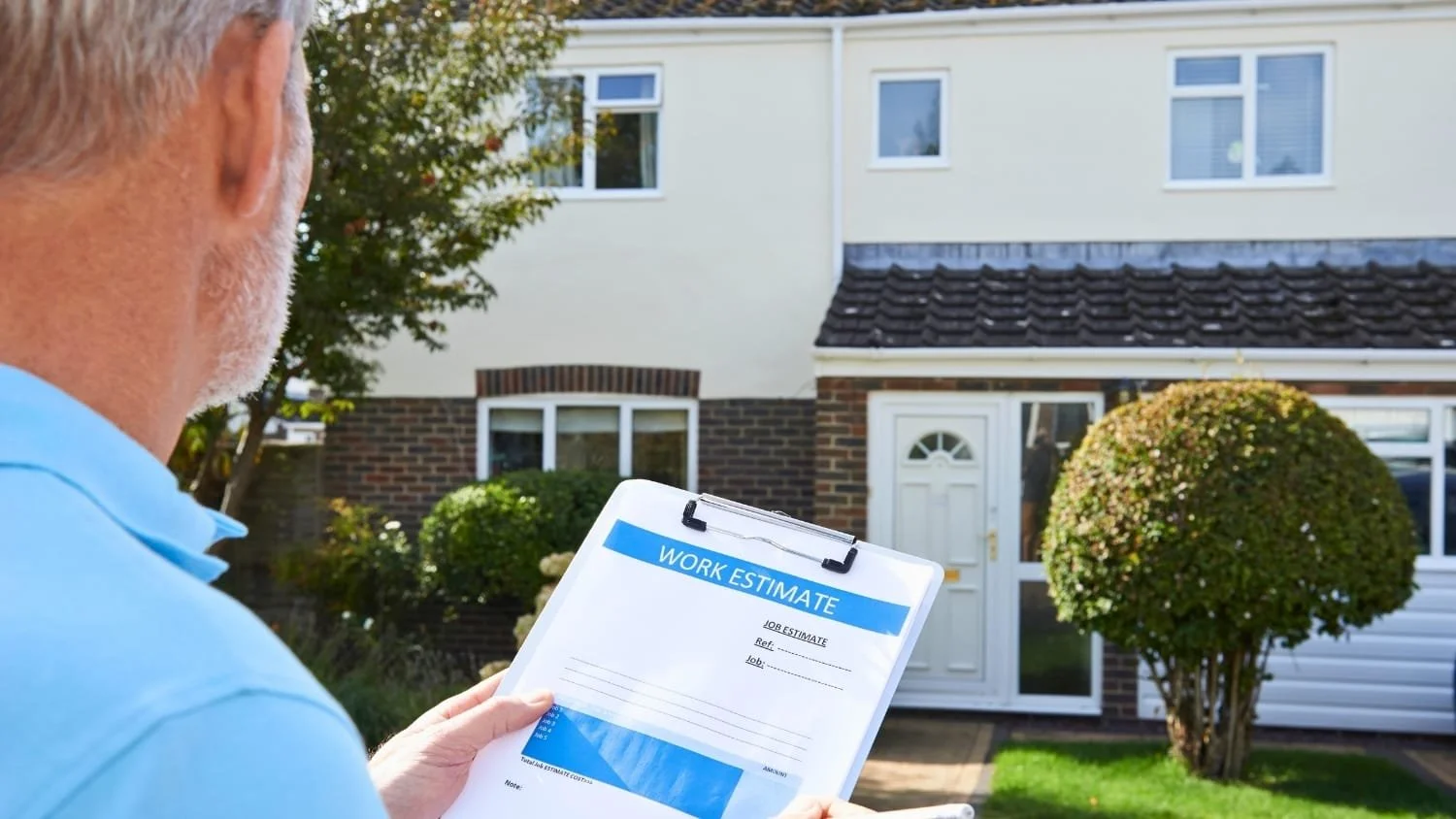
The second half of that question is where the real information lives. A detailed written estimate should itemize the shingle brand and product line, underlayment type, ice and water shield coverage, drip edge, flashing, ridge vent, number of existing layers being torn off, dumpster and disposal fees, permit costs, and cleanup. Then ask what is excluded.
Decking replacement is the most common hidden cost in the Midwest. Old roofs in Illinois and Wisconsin frequently hide soft or rotted plywood beneath the shingles, and no one knows until tear-off. A reputable contractor states the per-sheet price for decking replacement upfront, in writing, so there are no surprises while your house is open to the elements. The same applies to chimney flashing and deteriorated fascia.
Pause if: The estimate is a single number on one page with the word "roof." That is not a quote, it is a guess. Transparent, itemized pricing is the entire purpose of a written estimate and the only way to make a fair comparison between multiple bids. For more on accurate pricing expectations, see our guide on how much roof repair costs.
6. What Is the Payment Schedule?
Payment terms reveal a company's financial stability, which tells you whether they will still be around to finish the job. A reasonable payment structure looks like this:
Standard practice: A modest deposit at contract signing or material delivery, with the balance due after the job is complete and you have walked the finished roof.
Worth questioning: A large deposit requested before any materials arrive on site.
Walk away: Full payment upfront, cash only, or a same-day discount tied to signing before you have read the contract.
Also ask whether the contractor offers financing through a lending partner rather than an in-house arrangement. A real financing partner means the contractor is paid by the lender and you retain standard consumer protections. If the roof is an emergency and funds are not immediately available, that structure is far preferable to scrambling for alternatives.
7. What Exactly Does the Warranty Cover?
Every new roof carries two separate warranties, and they cover different types of failures. The manufacturer warranty covers defective materials. The workmanship warranty covers installation errors, and installation errors cause the majority of leaks on new roofs. Get the length of each warranty in writing before signing.
Then ask the questions most homeowners skip. Is the manufacturer warranty prorated, and from what date? Does it transfer if you sell the home? Does the workmanship warranty cover the labor to tear off and reinstall, or only replacement materials? What voids it, a satellite dish installation, a different contractor touching the roof later, skipped maintenance inspections?
Pause if: A contractor quotes a warranty length verbally with no documentation to back it up. Also pause if the contractor cannot clearly explain the difference between the two warranty types. Warranty terms change, so confirm current specifics directly with the contractor and the manufacturer before signing anything.
8. How Will You Handle Tear-Off, Ventilation, and Cleanup?
This question separates contractors who think about the full roofing system from those who think only about shingles. Ask whether they are tearing off to the deck or installing over the existing roof. Layovers are cheaper upfront, but they conceal rotted decking and create long-term problems. Avondale Roofing does not recommend layovers.
Ventilation is the detail most homeowners overlook entirely. Balanced intake at the soffit and exhaust at the ridge keeps attic temperatures closer to outside air, which is exactly what prevents the freeze-thaw cycle responsible for ice dams along the eaves. A contractor who quotes a full roof replacement without addressing ventilation or existing soffit blockage is treating the symptom rather than the cause.
On cleanup, ask specifically about magnetic nail sweeps of the lawn and driveway, dumpster placement, and protection of landscaping. Ask for your direct point of contact during the project and their expected response time for questions. These details are small in isolation, but they matter significantly on day three when weather changes the schedule.
Compare Three Bids the Right Way, Line by Line
Getting three bids only helps if you can evaluate them on equal footing. Most homeowners cannot, because each bid describes a slightly different scope. One estimate includes new decking allowance and ice shield to code; another includes neither and appears significantly cheaper.
Before comparing prices, list the shingle product line, ice and water shield coverage area, decking terms, ventilation work included, warranty lengths, and payment schedule for each bid in a single document. Then look at the price. When one number is substantially lower than the others, identify the specific line item that explains it. In most cases, it is tear-off scope, underlayment grade, or an uninsured crew.
If your replacement is running through an insurance claim, the comparison changes. The project scope should match your adjuster's estimate line by line, and the contractor should be comfortable communicating directly with the adjuster about any supplements needed. Our walkthrough of filing a roof insurance claim covers what documentation to gather before the process begins. If the damage is hail-related, our hail damage repair guide is worth reading before an adjuster climbs a ladder.
Do Your Homework Before the First Estimate Arrives
Twenty minutes of research before any contractor visits will sharpen every conversation you have. Look up the license number on the state regulator's website. Read Google reviews, and read the one-star reviews closely, because you are looking for how the company responded, not whether anyone was ever dissatisfied. Check the Better Business Bureau record. Search the company name alongside your city to verify whether the listed address is a real, permanent office.
Call two references from the past 12 months and ask one question: did the final price match the written estimate? That single question surfaces more problems than any other. Avondale Roofing's customer reviews are available on our reviews page, and the specific contractor warning signs to watch for are detailed in our guide on roofing contractor red flags.
Frequently Asked Questions
What are the most important questions to ask a roofing contractor?
The most critical questions to ask a roofing contractor involve licensing, insurance, and workers' compensation coverage first, because gaps in any of those areas can transfer real financial risk to you as the homeowner. After that, the written, itemized estimate with decking and flashing terms spelled out is the next most important. Everything else on this list matters, but those two areas protect you from the losses that are hardest to recover from.
Should I always choose the lowest roofing quote?
No. Low bids are almost always low for a traceable reason: a layover instead of a full tear-off, thinner underlayment, no allowance for damaged decking, or a crew without workers' compensation coverage. Find the specific line item that explains the difference before making a decision. Sometimes the low bid is legitimate and reflects a contractor with lower overhead, but you should be able to identify the reason clearly.
How much of a deposit is normal for a roof replacement?
A modest deposit at contract signing or at the time of material delivery is standard practice, with the balance due at project completion after your walkthrough. Full payment before work starts is the pattern to refuse. Ask for the full payment schedule in writing within the contract, and never pay cash without a signed receipt tied to a specific contract term.
Does the contractor pull the permit, or do I?
The contractor should pull it, and the permit fee should appear as a line item on your written estimate. Most municipalities across Northern Illinois and Southern Wisconsin require a permit for a full roof replacement. The required inspection protects you by ensuring the work meets local code. If a contractor asks you to pull the permit as the homeowner, that often signals a licensing issue on their end.
How do I verify that a roofing contractor's insurance is legitimate?
Request the certificate of insurance, then call the phone number listed for the carrier directly, not a number the contractor provides separately. Ask the carrier whether the policy is currently active and whether it covers roofing operations and workers' compensation. This process takes a single phone call and can prevent significant financial exposure.
How Many Roofing Quotes Should I Get Before Deciding?
Get at least three quotes before making a decision. One bid gives you a number. Three bids give you a basis for comparison. When you collect multiple itemized estimates, differences in scope become visible, one contractor includes ice and water shield, another does not; one specifies .032-gauge materials, another leaves the spec blank.
Pricing gaps that look like savings often trace back to thinner underlayment, a layover instead of a full tear-off, or a crew without workers' compensation coverage. Three detailed, written estimates let you identify those differences clearly and make a decision based on value, not just the lowest number on the page.
Why Illinois and Wisconsin Homeowners Trust Avondale Roofing
When you work with Avondale Roofing, every question on this list has a straightforward, documented answer:
35+ years of local experience, serving Illinois and Wisconsin homeowners since 1988
GAF Master Elite and President's Club certification, held by less than 2% of roofing companies nationwide
Fully licensed and insured in both Illinois and Wisconsin
Permanent offices in Edgerton, Wisconsin and Elgin, Illinois
In-house crews with consistent supervision on every project
Detailed written estimates with all inclusions and exclusions clearly stated
Strong manufacturer and workmanship warranties in writing
Free, no-obligation inspections with no pressure to decide on the spot
We treat every home like our own, because protecting what matters most to our neighbors is what we have built our reputation on.
Schedule Your Free Roof Inspection Today
Print these eight questions and bring them to every estimate appointment. Write the answers down while the contractor is present, by the third bid, you will not remember which company said what without notes. The questions to ask a roofing contractor are only half the work; the documentation is what allows a fair, confident comparison.
When you are ready to add Avondale Roofing to your list, schedule a free roof inspection online or call us at 855-819-ROOF (7663). We will answer every question in writing, walk your roof, and provide a detailed estimate for the residential roofing work your home needs, with no obligation to proceed.
Avondale Roofing serves homeowners across Southern Wisconsin and Northern Illinois, from Janesville and Beloit to Delavan, Elgin, and Edgerton