
Discover how TPO, PVC, and modified bitumen compare for Midwest commercial flat roofs. Learn how climate, cost, ponding water, and building usage determine the right system for long-term performance.
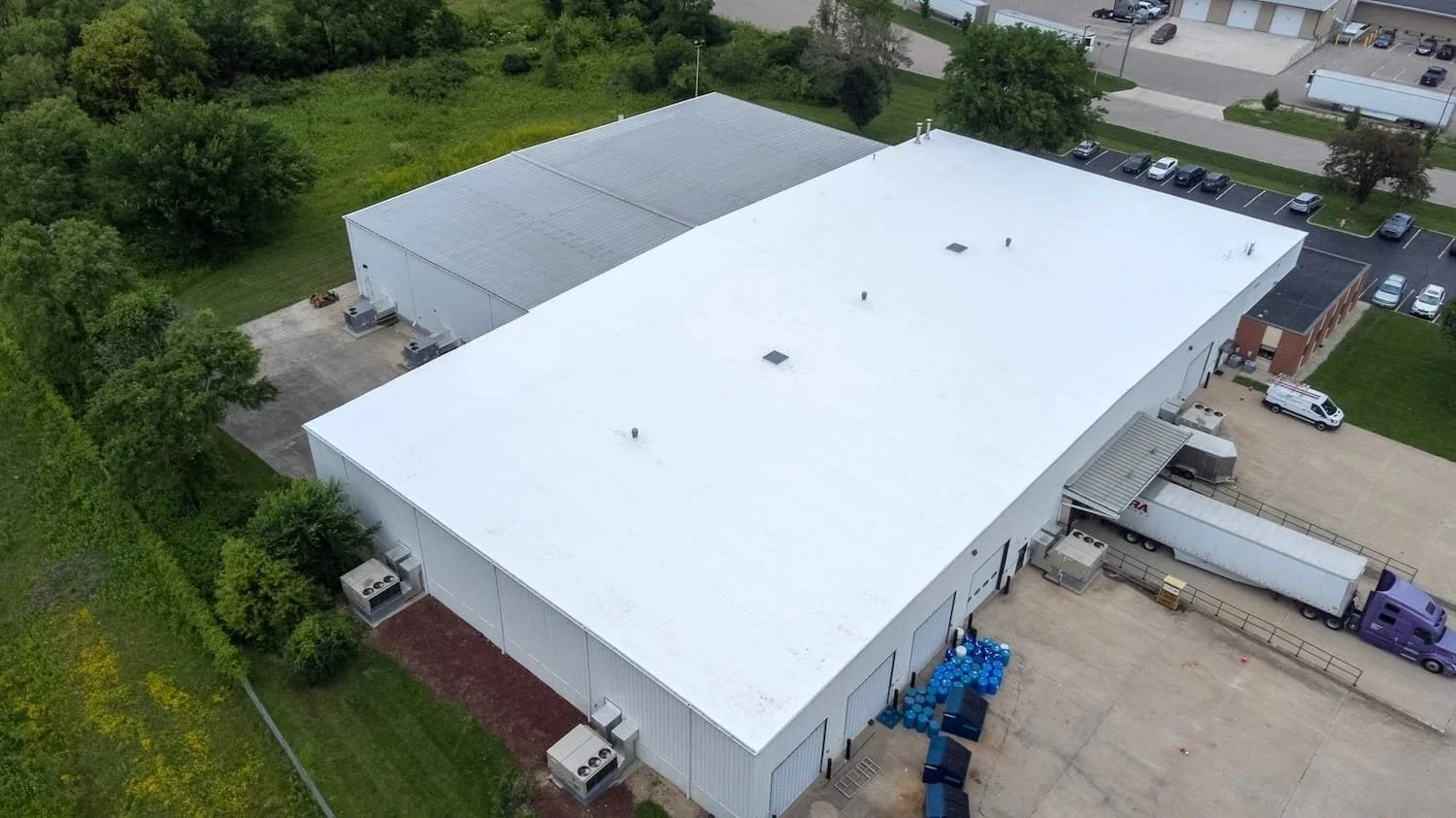
TPO, PVC, and modified bitumen are the three flat roofing systems that dominate commercial buildings across Illinois and Wisconsin, and each handles freeze-thaw cycling, snow load, and ponding water differently. TPO is the practical default for warehouses, offices, and retail that want energy savings at a lower cost. PVC costs more but resists grease, chemicals, and standing water better than anything else, which suits restaurants and food service. Modified bitumen uses multiple layers for redundancy and puncture resistance, making it a strong fit for smaller buildings and high-traffic HVAC roofs.
The single biggest mistake commercial property owners make is picking a membrane on price per square foot alone, then watching it fail early because it was never right for a Midwest climate. Flat roofs here have to survive freeze-thaw swings, heavy snow load, ponding water after spring thaw, and lake-effect moisture near Chicago and Milwaukee.
This guide breaks down TPO, PVC, and modified bitumen in detail: the strengths and weaknesses of each, how climate should drive your choice, what really moves cost, and how to match a system to your building. If you want the wider view of every commercial option, including metal and asphalt, our top 5 commercial roofing materials post is the broader overview. This piece is the deep dive on low-slope systems.
Why flat commercial roofs behave differently in the Midwest
A steep residential roof sheds water and snow by gravity. A flat commercial roof (technically low-slope, usually pitched a quarter-inch per foot or less) holds everything on top of it until drains and slope carry it away. That difference is everything in the Upper Midwest.
Three regional pressures shape which membrane lasts:
Freeze-thaw cycling. Water works into seams and small punctures, freezes, expands, and pries them open. A system with weak or field-taped seams degrades fast under this pattern, which is common from late fall through early spring across both states.
Snow load and ice. Wet Midwest snow is heavy, and drifting piles it unevenly. Ponding meltwater refreezes into ice that stresses membranes and flashings. On buildings that hold snow all winter, professional snow removal protects the roof rather than being an optional extra.
Ponding water. Poor slope or clogged drains leave standing water for days. Some membranes tolerate constant moisture far better than others, and that tolerance should weigh heavily in your decision.
Because Illinois and Wisconsin face the same core challenges, the material logic carries across the whole region, from the northern Chicago suburbs up through southern Wisconsin.
TPO: the popular single-ply workhorse
TPO (thermoplastic polyolefin) is a single-ply membrane, usually white, that reflects sunlight and heat-welds at the seams into one continuous surface. It has become the default choice for a lot of commercial flat roofing in Illinois and Wisconsin, for good reasons.
The heat-welded seams are the key strength. Instead of relying on adhesives or tape that can peel under freeze-thaw stress, a hot-air weld fuses two sheets into a single piece. Done right, the seam is stronger than the membrane itself. That matters here, where seam failure is the most common way a cheap flat roof leaks.
The reflective white surface also cuts cooling costs in summer, which helps on large warehouse and retail footprints. TPO is lighter than most alternatives, so it works on buildings where added weight is a concern.
Where does TPO fall short? Quality varies more than buyers expect, and installation skill matters enormously. A poorly welded seam or an under-thick membrane will not deliver the lifespan you were sold. This is exactly why the installer matters as much as the material. If you want to see how the job should be done, our walkthrough on how TPO roofing is installed shows what a clean install looks like.
TPO is a strong pick for warehouses, retail, offices, and light industrial buildings that want energy savings and a proven single-ply system at a reasonable cost.
PVC: the premium single-ply for tough conditions
PVC (polyvinyl chloride) is TPO's older, tougher cousin. It is also a heat-welded single-ply membrane, but it holds up to chemicals, grease, and constant moisture better than almost anything else on the market. That makes it the go-to for restaurants, food processing, and any building venting oils or fats onto the roof.
For flat roofs that pond water or sit under snow for weeks, PVC's resistance to standing moisture is a real advantage in a freeze-thaw climate. The welded seams give you the same continuous-surface benefit as TPO, and PVC tends to stay flexible in the cold, which reduces cracking risk during a Wisconsin January.
The tradeoff is cost. PVC generally runs higher per square foot than TPO, and older PVC formulations could get brittle over decades, though modern membranes have largely addressed that. For a business weighing the two, the deciding factors are usually chemical exposure, ponding, and budget.
We break the two systems down head-to-head in our TPO vs. PVC comparison, which is worth reading if your building has grease or chemical exposure and you are torn between them.
Modified bitumen: the multi-layer veteran
Modified bitumen is asphalt-based roofing reinforced with polymers and installed in layers, either torch-applied, cold-applied with adhesive, or self-adhered. It is the modern descendant of built-up roofing (BUR), and it earns its place through sheer redundancy.
Multiple layers mean multiple lines of defense. If one layer takes damage, the others still hold water back. That layered toughness stands up well to foot traffic, which matters on roofs with rooftop HVAC units that need regular servicing. Modified bitumen also handles temperature swings without getting brittle, a genuine benefit across our freeze-thaw region.
The downsides are weight and appearance. It is heavier than single-ply, so the structure has to support it, and the dark surface absorbs heat instead of reflecting it (though reflective cap sheets and coatings are available). Torch-applied installation also involves an open flame, so the crew's safety practices and experience carry real weight.
Modified bitumen suits smaller commercial buildings, roofs with heavy equipment traffic, and owners who prioritize puncture resistance over the energy savings a reflective membrane provides. For a closer look, see our guide to modified bitumen roofing for commercial buildings.
Comparing the three systems side by side
Here is how the main flat roof membranes stack up on the factors that matter most in Illinois and Wisconsin. Treat lifespans as typical ranges for a well-installed, maintained system, not guarantees, since installation quality and upkeep move those numbers more than the material label does.
| System | Typical lifespan | Cold-weather performance | Ponding resistance | Best fit |
|---|---|---|---|---|
| TPO | 15–25 years | Good; welded seams resist freeze-thaw | Moderate | Warehouses, retail, offices wanting energy savings |
| PVC | 20–30 years | Strong; stays flexible in cold | High | Restaurants, food processing, chemical or grease exposure |
| Modified bitumen | 15–20 years | Strong; layered and flexible | Moderate to high | High-traffic roofs, smaller buildings, puncture resistance |
| EPDM (rubber) | 20–25 years | Good; but seams are adhesive-based | Moderate | Budget projects, simple roof shapes |
EPDM (a black rubber single-ply) belongs in the conversation because it is common and inexpensive, but its adhesive or taped seams are more vulnerable to freeze-thaw than heat-welded systems, which is why welded TPO and PVC have taken so much of the market here.
What drives the cost of a commercial flat roof
Pricing for commercial flat roofing in Illinois and Wisconsin varies too widely for a single reliable number, because the material is only one input. Anyone quoting a firm price sight-unseen is guessing. The real drivers are:
Roof size and complexity. A wide-open warehouse deck costs less per square foot than a small roof crowded with HVAC units, skylights, and penetrations that each need flashing.
Material and membrane thickness. PVC costs more than TPO, and thicker membranes cost more than thin ones (and last longer). Modified bitumen pricing depends on how many layers.
Tear-off vs. recover. Removing an old roof adds labor and disposal cost. Sometimes a new membrane can go over the existing one, sometimes it cannot. Wet or failing insulation underneath usually forces a full tear-off.
Insulation and drainage work. Adding tapered insulation to fix ponding, or upgrading R-value for energy code, adds cost but often pays back.
Access and safety. Height, rooftop obstacles, and site logistics affect labor.
The way to get a real figure is a written, itemized estimate after an inspection, not a phone quote. Avondale Roofing provides detailed written estimates so you can see exactly what is driving the price, and flexible financing is available to spread the cost of a larger replacement.
For a broader sense of how the repair-versus-replacement math works, our look at when to repair vs. replace a roof applies to commercial roofs too.
How to choose the right flat roof system for your building
Start with your building's use, not the price sheet. A few questions sort most decisions quickly:
Does your roof vent grease or chemicals? If yes, lean toward PVC. It is the one system built to shrug off that exposure.
Does water pond after rain or snowmelt? Standing water favors PVC, and any choice should come with drainage or tapered-insulation fixes so the problem does not outlive the old membrane.
Is there heavy foot traffic for equipment servicing? Modified bitumen's layered toughness handles boots and dropped tools better than thin single-ply.
Are you chasing summer energy savings on a big footprint? A reflective white TPO or PVC surface cuts cooling load on large warehouse and retail roofs.
Is weight a concern? Single-ply TPO is the lightest of the three.
Whatever you pick, the installer's skill decides whether you get the top or bottom of that lifespan range. A perfectly specified PVC roof welded by an inexperienced crew will underperform a well-installed TPO roof every time. Verify the contractor is licensed, insured, and locally established, and ask to see flat roof projects they have completed.
Maintenance is what gets you to 25 years
No flat roof reaches the top of its lifespan on autopilot. Drains clog, seams need checking, flashings loosen, and small punctures become leaks if nobody catches them. A twice-yearly inspection, spring and fall, plus a look after major storms, is the cheapest insurance you can buy for a commercial roof.
For single-ply roofs especially, keeping the surface clean and the drains clear prevents the ponding and debris buildup that shortens membrane life. Our guide on the signs your TPO roof needs maintenance gives you a practical routine, and scheduling routine commercial inspections catches problems while they are still cheap repairs instead of full replacements.
Frequently asked questions
Which flat roof material lasts longest in Illinois and Wisconsin?
PVC typically offers the longest service life for commercial flat roofing in Illinois and Wisconsin, often 20 to 30 years, largely because it stays flexible in cold weather and resists standing water and chemicals better than the alternatives. That said, a well-installed and maintained TPO or modified bitumen roof can come close, and installation quality affects longevity more than the material name on the invoice.
Is TPO or PVC better for a commercial flat roof?
TPO gives you proven single-ply performance and energy savings at a lower cost, making it the practical default for most warehouses, offices, and retail. PVC costs more but is the better choice if your roof vents grease or chemicals or holds ponding water, since it is built to withstand those conditions. Match the membrane to how your building uses the roof.
Can you install a new flat roof over the existing one?
Sometimes. A recover installation saves on tear-off labor and disposal, but only when the existing roof and insulation are dry and structurally sound. Wet or deteriorating insulation traps moisture and will destroy a new membrane from below, so those roofs need a full tear-off. An inspection is the only way to know which applies to your building.
How much does a commercial flat roof cost in Illinois or Wisconsin?
Cost depends on roof size, membrane type and thickness, whether the old roof gets removed, and any drainage or insulation work needed, so there is no single reliable number. The responsible way to get an accurate figure is a written, itemized estimate after an on-site inspection rather than a phone quote.
Do commercial flat roofs need snow removal?
On buildings that accumulate heavy or drifting snow, yes. Wet Midwest snow is heavy, and meltwater that refreezes stresses membranes, flashings, and the structure itself. Professional removal protects both the roof and the building, and it is far cheaper than repairing the damage a season of ignored snow load can cause.
What is the best flat roof for a restaurant or food service building?
PVC is usually the best fit for restaurants and food service. It resists the grease, oils, and chemicals that vent onto these roofs better than TPO or modified bitumen, and it holds up well to ponding water. That resistance is why PVC is the standard recommendation for kitchens and processing facilities across the Midwest.
How often should a commercial flat roof be inspected?
Plan on two professional inspections a year, in spring and fall, plus a check after any major storm or heavy snow. Regular inspections catch clogged drains, loose flashings, and small punctures early, while they are still inexpensive repairs rather than the kind of hidden damage that leads to premature replacement.
Get a straight assessment of your flat roof
The right membrane for your building comes down to how you use the roof, how your site drains, and who installs it. With more than 35 years serving businesses across both states since 1988, GAF Master Elite certification, and local offices in Edgerton, Wisconsin and Elgin, Illinois, Avondale Roofing installs and services TPO, PVC, and modified bitumen flat roof systems built for the Midwest climate. We provide free written estimates, offer flexible financing, and welcome insurance work.
Schedule your free, no-obligation inspection today and get a detailed written estimate for your commercial flat roof.