
Modified Bitumen Roofing for Commercial Buildings: How It Works and When to Use It
A beginner's guide to modified bitumen roofing for commercial buildings in Illinois: how it works, install methods, lifespan, cost factors, and when to use it.
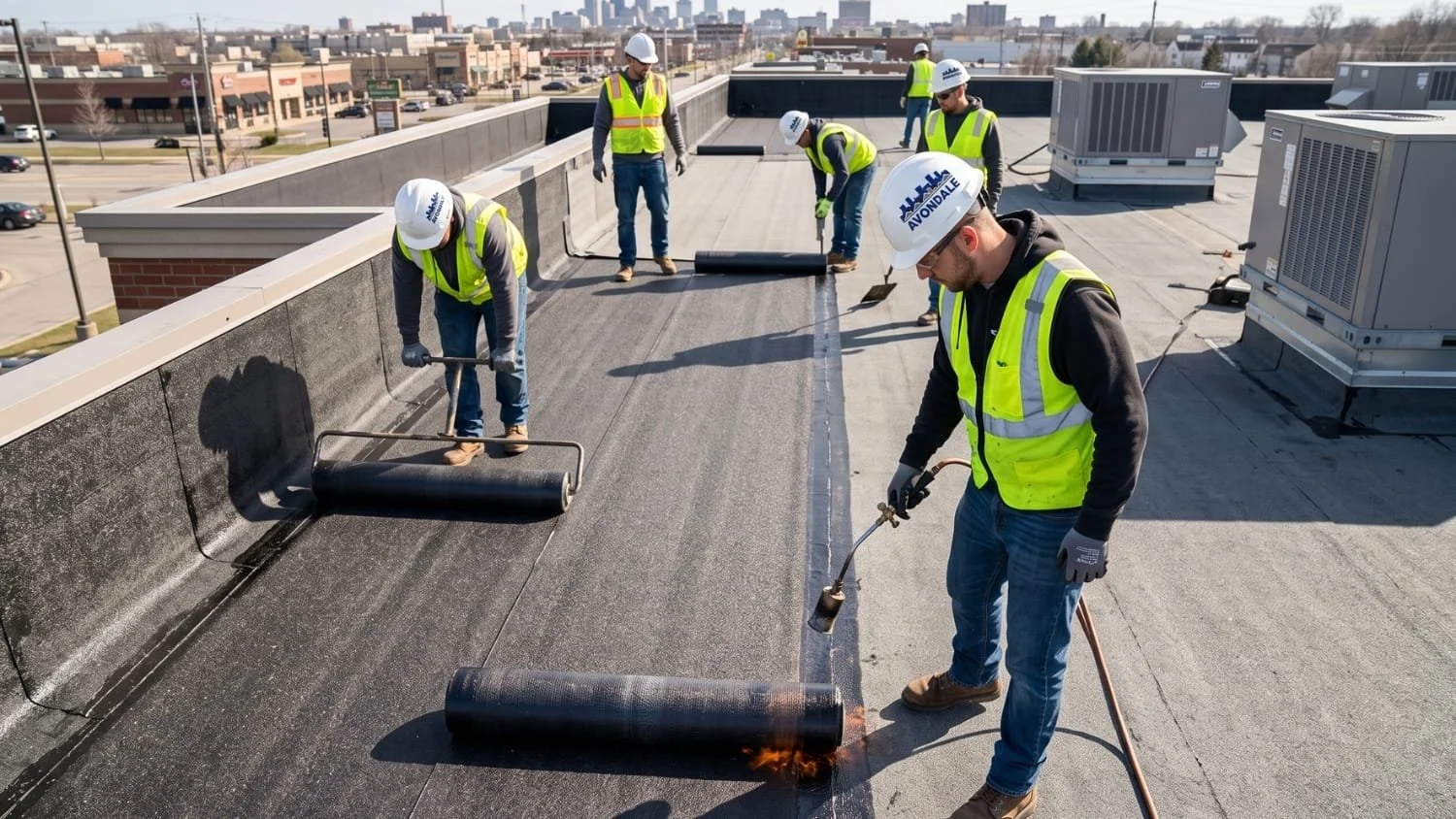
Modified bitumen roofing is asphalt reinforced with polymers, rolled out in layers across a flat or low-slope roof to create a tough, waterproof surface. For commercial buildings in Illinois, modified bitumen roofing earns its place because it handles the two things that wreck flat roofs here: standing water and hard freeze-thaw swings. If you own or manage a warehouse, retail strip, office building, or apartment block with a flat roof, this is one of the systems you'll be quoted on, and it helps to know exactly what you're getting.
This guide starts from zero. You'll learn what the material is, how it's put down, how long it lasts, how it stacks up against TPO and EPDM, and how the Midwest climate should shape your decision. No prior roofing knowledge assumed.
What is Modified Bitumen Roofing?
Start with the base material: bitumen is asphalt, the same black, waterproof stuff used on roads. On its own, plain asphalt gets brittle in cold weather and soft in heat. "Modified" means manufacturers blend in polymers to fix those weaknesses, giving the sheet flexibility in the cold and stability in the heat. That single change is why the material works on a Rockford warehouse in January and a Chicago rooftop in August.
The roofing comes in rolls, not shingles or a single stretched sheet. Crews layer those rolls across the roof deck, usually over a base sheet and insulation, then bond or fuse them together so water can't find a seam to sneak through. The finished roof is a multi-ply membrane, often two or three layers thick, which is a big part of why it holds up so well to foot traffic, hail, and debris.
SBS vs. APP: The Two Polymer Types
Two polymers dominate the market, and the difference matters more than most sales pitches let on.
SBS (styrene-butadiene-styrene) adds rubber-like elasticity. An SBS sheet stretches and rebounds, which is exactly what you want on a building that expands and contracts through Illinois winters. SBS can be installed hot, cold, or as a peel-and-stick self-adhered sheet, so it fits more situations. For most Midwest commercial roofs, SBS is the stronger default because its flexibility fights the freeze-thaw cracking that kills flat roofs here.
APP (atactic polypropylene) makes the sheet more plastic and more heat-tolerant. APP is almost always torch-applied, and it holds up beautifully to intense sun and high heat. In a climate that leans hotter than colder, APP is a fine choice. In northern Illinois and Wisconsin, where the cold does more damage than the heat, SBS usually earns the nod.
| Feature | SBS modified bitumen | APP modified bitumen |
|---|---|---|
| Key trait | Rubber-like flexibility | Plastic-like heat tolerance |
| Cold-weather behavior | Stays flexible, resists cracking | Stiffer in extreme cold |
| Install methods | Torch, hot asphalt, cold adhesive, self-adhered | Mostly torch-applied |
| Best fit | Freeze-thaw climates like IL and WI | Hot, high-sun climates |
Why Choose Modified Bitumen for Flat or Low-Slope Roofs?
Pitched shingle roofs shed water downhill fast. Flat and low-slope roofs don't have that luxury, so water lingers, pools in low spots, and pushes at every joint. A commercial roof system has to be watertight across its whole surface, not just good at draining. Modified bitumen delivers that because it's a continuous, multi-layer membrane with fused seams instead of hundreds of individual overlapping pieces.
The layered build also stands up to what happens on a working roof. HVAC techs walk it, hail hits it, and branches drop on it. A single-ply membrane can be punctured; a multi-ply bitumen roof has backup layers underneath. If you're weighing your options across the full range of flat roof systems, it's worth reading through a rundown of commercial flat roofing systems before you commit, because the right pick depends heavily on your building's use and drainage.
The Four Installation Methods
How the roof gets bonded to the deck changes the price, the smell, the safety profile, and sometimes whether it's even allowed on your building. There are four methods, and a good contractor will recommend one based on your deck, your occupancy, and local fire codes.
Torch-down: A crew uses an open-flame torch to melt the underside of the sheet and weld it to the layer below. Fast and strong, but it's open flame on a roof, so many occupied buildings and fire-sensitive properties rule it out.
Hot-applied (hot mopped): Crews spread molten asphalt to glue the layers. Time-tested and durable, but it involves a kettle of hot asphalt and the fumes that come with it.
Cold-applied adhesive: The sheets are bonded with an adhesive instead of heat. No flame, lower fumes, and a good fit for occupied buildings like schools, medical offices, and apartments.
Self-adhered (peel-and-stick): The sheet has a factory adhesive backing; crews peel and roll it into place. The cleanest and safest option, though usually reserved for SBS products and sometimes limited by roof size or slope.
If your building stays occupied during the job, push for cold-applied or self-adhered. The small cost difference is worth avoiding torch fire risk and asphalt fumes over your tenants' heads.
How Long Does Modified Bitumen Roofing Last?
A properly installed and maintained modified bitumen roof typically serves a commercial building for two to three decades, with the exact number driven by install quality, the number of plies, drainage, and how faithfully it gets inspected. The install matters more than the brand. A premium sheet put down over poor drainage with sloppy seams will fail early; a mid-grade sheet installed correctly with good slope will run the full stretch.
Two habits stretch that lifespan. First, keep water moving off the roof by cleaning drains and scuppers so nothing ponds. Second, catch small problems before they spread. The same discipline that protects a single-ply roof applies here, and the routine laid out in a commercial roof maintenance checklist transfers directly to bitumen: walk the roof twice a year, check the seams and flashings, and clear debris after storms.
Modified Bitumen vs. TPO and EPDM
You won't decide on bitumen in a vacuum. The two systems it competes with most are TPO and EPDM, both single-ply membranes, and each has a case.
TPO is a white, single-ply sheet that reflects sunlight, which can trim cooling costs on a sun-baked building. It's lighter and often cheaper to install, but it's one layer, so a puncture is a more direct threat. If reflectivity and budget lead your priorities, the TPO installation process is worth understanding, and so is how it compares against PVC on a similar single-ply build.
EPDM is black rubber, extremely flexible and long-lived, but its dark surface absorbs heat and its seams rely on adhesives or tape that need attention over time.
Modified bitumen sits apart from both because it's multi-ply. That extra thickness buys puncture resistance and redundancy at the cost of a bit more weight and, with torch or hot methods, a more involved install. Here's the plain trade: TPO and EPDM win on weight and reflectivity; bitumen wins on toughness and forgiving redundancy. For a busy roof with heavy foot traffic or one that takes regular hail, that toughness usually pays off.
Why Modified Bitumen Roofing for Commercial Illinois Buildings Holds Up to Illinois and Wisconsin Weather
The Midwest is hard on flat roofs, and this is where modified bitumen commercial systems in Illinois show their value. The freeze-thaw cycle is the main culprit: water seeps into small gaps, freezes overnight, expands, and pries the gap wider. Repeat that a hundred times over a winter and a rigid roof cracks. SBS-modified sheets flex with those movements instead of snapping, which is the single biggest reason the material fits this climate.
Snow load is the next factor. A multi-ply bitumen membrane carries the weight of a heavy snowpack without the puncture risk a single sheet faces from ice chunks and debris. Even so, deep or drifting snow on any flat commercial roof deserves attention, and scheduling professional roof snow removal before the load gets dangerous protects both the membrane and the structure underneath.
Hail is the third. Illinois and Wisconsin see regular hail, and the layered surface of a bitumen roof absorbs impact better than a thin membrane. If your roof does take a beating, document it promptly. The steps in a guide to handling hail damage and the insurance side apply to flat commercial roofs too, and moving fast keeps a bruised roof from turning into a leaking one.
What Drives the Cost
No two flat-roof quotes match, because the price rides on several moving parts rather than a flat per-square-foot number. Rather than chase a figure that shifts with the market, understand what pushes your estimate up or down:
Square footage: Bigger roofs cost more in total but often less per square foot as fixed setup costs spread out.
Tear-off vs. recover: Stripping the old roof down to the deck costs more than laying a new system over a sound existing one. Recovering is cheaper, but only works if the base underneath is dry and stable.
Material grade and ply count: A three-ply system costs more than two plies and lasts accordingly.
Install method: Torch and hot-applied labor differs from cold-applied and self-adhered.
Roof access and complexity: Rooftop units, penetrations, parapets, and tricky access all add labor.
Ask for a detailed written estimate that itemizes these lines so you can compare bids on equal footing. If cash flow is the sticking point, spreading a commercial roof over time through flexible financing is usually more affordable than nursing a failing roof through another winter of leaks.
When Modified Bitumen is the Right Call
Go for modified bitumen when your roof sees real activity: heavy foot traffic from equipment servicing, frequent hail exposure, or a rooftop crowded with HVAC units and penetrations. The redundancy of multiple plies rewards buildings where a single-ply puncture would be a real risk. It's also a strong pick when you want a durable, lower-maintenance surface and you're not chasing the cooling savings a reflective white membrane offers.
Lean toward TPO or another single-ply system when weight is a concern, when energy reflectivity is a priority, or when your budget is tight and the roof stays relatively undisturbed. And if you're weighing this against putting up with an aging roof, the framework in a look at repair versus replacement helps you decide whether patching buys real time or just delays the inevitable.
Frequently Asked Questions
Is modified bitumen roofing a good fit for a commercial building in Illinois?
Modified bitumen roofing commercial Illinois buildings use for most flat and low-slope properties works well, and the answer is generally yes. Modified bitumen commercial roofing in Illinois handles freeze-thaw cycling, snow load, and hail well, especially the SBS type, which stays flexible in the cold. It's an especially good match for roofs with heavy foot traffic or lots of rooftop equipment, where the multi-ply build resists the punctures that threaten thinner single-ply systems.
How long does a modified bitumen roof last?
A well-installed and maintained system usually serves a commercial building for two to three decades. Install quality, ply count, drainage, and regular inspections drive the number more than the brand does. Keeping drains clear and scheduling twice-yearly inspections is the surest way to reach the top of that range.
What's the difference between SBS and APP modified bitumen?
SBS uses a rubber-like polymer that keeps the sheet flexible in cold weather, and it can be installed hot, cold, or self-adhered. APP uses a plastic-like polymer built for high heat and is almost always torch-applied. For the colder Illinois and Wisconsin climate, SBS is generally the better performer because its flexibility resists freeze-thaw cracking.
Can modified bitumen be installed without an open flame?
Yes. Cold-applied adhesive and self-adhered peel-and-stick methods bond the sheets without a torch, which makes them the safer choice for occupied buildings like schools, medical offices, and apartments. If your building stays in use during the project, ask your contractor about these flame-free options.
How does modified bitumen compare to TPO for a flat roof?
TPO is a lighter, reflective single-ply membrane that can lower cooling costs and often installs for less. Modified bitumen is a heavier multi-ply system that trades some of that reflectivity for puncture resistance and redundancy. Choose TPO for weight savings and energy reflectivity; choose bitumen for toughness on a busy or hail-prone roof.
Get a straight assessment of your flat roof
The best way to know whether modified bitumen roofing commercial Illinois property owners rely on is right for your building is to have someone walk the roof, check the deck and drainage, and give you an itemized written estimate you can compare against other bids. Avondale Roofing has served commercial and residential properties across Illinois and Wisconsin since 1988, with local offices in Elgin, Illinois and Edgerton, Wisconsin.
Schedule a free, no-obligation inspection, or learn more about our commercial flat roof systems including modified bitumen, TPO, and PVC. One roof visit tells you far more than any quote sight-unseen.