
Storm Damage Roof Repair in Illinois and Wisconsin: What Homeowners Need to Know
Storm damage roof repair in Illinois and Wisconsin requires fast action. The first 72 hours after a storm determine whether a roof needs a patch or a full replacement. Hail bruises shingles and strips protective granules, wind lifts and tears them at the edges, and ice dams push water back under the roofline in winter. Each leaves a different fingerprint a homeowner can learn to spot.
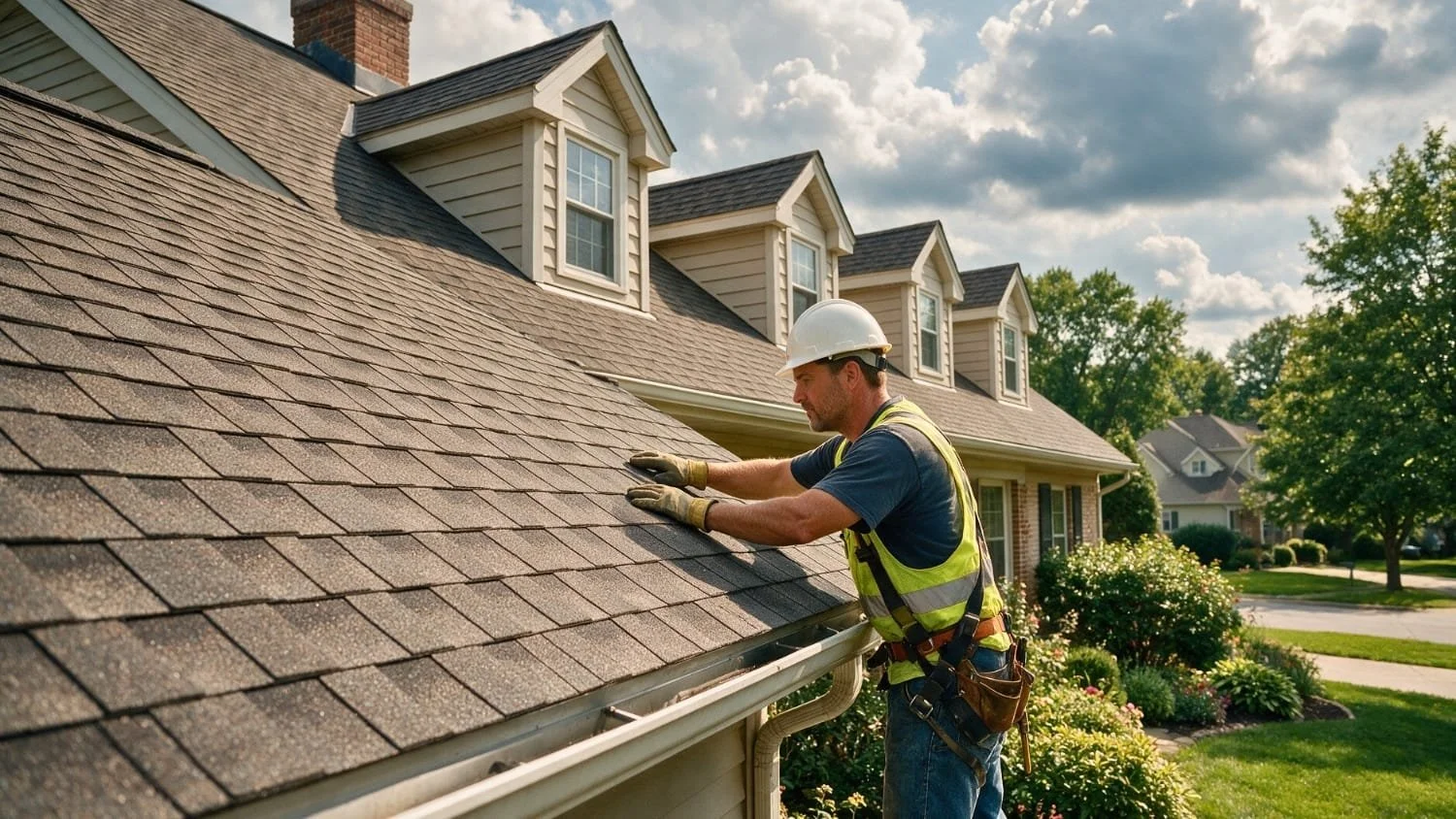
Damage covering roughly 30 percent or more of a roof surface typically points to replacement rather than repair, and most insurance policies authorize a full replacement at that threshold. Both Illinois and Wisconsin cover sudden storm damage from hail, wind, and falling objects under standard policies, but not damage from age or deferred maintenance. Hail repair costs in this region typically run from $375 to $7,500, averaging near $4,250, according to Angi's cost data.
This guide covers how to spot storm damage, what to do in the hours right after, how insurance claims work in each state, and how to decide between a repair and a full replacement.
What Types of Storm Damage Do Illinois and Wisconsin Roofs Experience?
Illinois and Wisconsin roofs face five main types of storm damage, each leaving a distinct fingerprint.
Hail bruises and cracks shingle surfaces, knocking off the protective granules that shield the asphalt underneath.
Wind lifts and peels shingles at the edges, sometimes tearing whole sections away and exposing the underlayment.
Falling limbs and debris puncture the deck outright.
Heavy rain drives water under compromised flashing and into attic spaces.
And in winter, ice and snow load the structure and back water up under shingles through ice dams.
The seasonal timing is predictable enough to plan around. Spring hail season in northern Illinois and southern Wisconsin tends to peak from April through June, when warm Gulf air collides with cold fronts sweeping down from Canada. That collision zone overlaps the northern edge of the country's most active severe-weather corridor, which is why counties around Rockford, Beloit, and Janesville see repeated hail cycles some years.
Summer brings straight-line winds and the occasional tornado. Late fall and winter shift the threat to lake-effect snow off Lake Michigan, which dumps heavy accumulation on roofs in the Milwaukee and Racine areas, and to ice dams that form on any home with uneven attic insulation.
Hail is the sneaky one. A roof can look fine from the ground after a hailstorm and still have hundreds of granule-loss impact points that shorten its life by years. That's why a walkable inspection matters even when nothing looks obviously wrong.
How to Spot Storm Damage After the Weather Clears
You don't need to climb onto a wet or damaged roof to gather most of what you need. Start from the ground and work up.
Shingle pieces or granules in the yard and gutters. Loose granules collecting at downspout outlets look like coarse black sand. That's your roof's protective layer washing away.
Dented gutters, downspouts, and metal vents. Soft aluminum records hail impacts clearly, and it's a reliable proxy for what hit the shingles above.
Bruised or cracked shingles. Hail leaves round dark spots where granules are gone; wind leaves torn or lifted tabs, often along ridges and eaves.
Damaged flashing around chimneys, skylights, and valleys. Bent or displaced metal here is a fast path to leaks.
Interior signs. Water stains on ceilings, peeling paint, or a musty attic smell mean water is already inside.
Check the less obvious spots too. Dented AC condenser fins, dinged garage doors, and pockmarked deck railings all corroborate a hail claim, and adjusters look for that supporting evidence.
For a deeper walkthrough of what to look for and photograph, our breakdown of spotting roof damage after a storm lays out the full inspection sequence step by step.
What Should You Do in the First Hours After Storm Damage?
Your job right after a storm is mitigation and documentation, in that order. If water is coming in, stop it from spreading. If it's not, protect the exposed area before the next round of weather arrives.
Temporary tarping is the standard emergency fix, and it's worth doing right. Use a heavy-duty poly tarp large enough to cover the damaged area plus a few feet of overlap on all sides. Run it up over the ridge if you can so water can't get underneath, and anchor it with wood strips screwed into the decking rather than loose bricks or sandbags that shift.
Inside, move furniture and electronics away from active leaks and set out buckets. If a ceiling is bulging with trapped water, puncturing it with a small hole over a bucket relieves the load and prevents a larger collapse.
Do not climb onto a roof that's wet, steep, or structurally compromised. If tarping isn't safe to do yourself, that's exactly what 24/7 emergency roof repair exists for. A crew can tarp and stabilize the same day, which also protects your insurance claim by preventing the secondary water damage that insurers sometimes blame on homeowner neglect.
Document everything before anything gets cleaned up or repaired. Photograph the damage from multiple angles, get wide shots that establish location and close-ups that show detail, and note the date and time of the storm. Save any local weather reports or news coverage confirming hail or wind in your area. This is the evidence your claim rests on.
“I had to call Avondale roofing to help with an emergency situation of a tree landing on our roof. They were very communicative, professional and fast acting! They were able to come out almost immediately to tarp our roof to prevent water/weather from getting in. I would highly recommend them!”
Should You Repair or Replace a Storm-Damaged Roof?
The deciding factors are how much of the roof is affected, how old it already was, and whether the damage reaches the deck. When storm damage affects roughly a third or more of the roof surface, replacement usually makes more financial sense than spot repairs. Many insurance policies will authorize a full replacement at that point.
Repair is better suited for roofs with isolated, localized damage and years of life remaining. Replacement makes more sense when damage is widespread, granule loss covers the whole field, or the roof was already near the end of its lifespan.
Situation | Typical path | Why |
|---|---|---|
A few missing shingles, isolated area | Repair | Localized, deck intact, matching shingles available |
Widespread granule loss across the field | Replace | Whole surface aged prematurely, not fixable in patches |
Damage over ~30% of the roof | Replace | Cost and insurance thresholds favor full replacement |
Tree puncture through the deck | Repair or partial replace | Depends on structural damage below the puncture |
Roof already near end of life (20+ yrs) | Replace | Repairs won't extend a worn-out system meaningfully |
Age changes the math. A ten-year-old roof with wind damage on one slope is a strong repair candidate. A twenty-year-old roof with the same damage is usually worth replacing, because you'll be back for the rest of it within a couple of seasons. For a full breakdown of the cost and longevity tradeoffs, see our comparison of roof repair versus replacement.
Repair timelines vary by damage type. Wind damage with a handful of missing shingles is often a one-day fix once materials are on hand. Hail damage that qualifies for replacement runs one to three days of actual work depending on roof size and pitch. Tree-impact damage takes the longest, sometimes a week or more, because the deck and framing may need structural repair before new roofing goes on.
How Do Insurance Claims Work for Storm Damage in Illinois vs. Wisconsin?
Storm damage roof repair in Illinois and Wisconsin almost always runs through a homeowner's insurance claim. Both states cover sudden storm damage from hail, wind, and falling objects under standard policies. Neither typically covers damage from age, wear, or deferred maintenance, which is one reason documentation of a specific storm event matters so much.
Illinois and Wisconsin both set their own rules on claim filing windows and how public adjusters can operate. Those rules change, so confirm the current deadlines with your insurer and your state's department of insurance before assuming anything.
What holds in both states: file promptly, because most policies require notice within a reasonable period after the loss, and waiting can give the insurer grounds to deny.
The claim process follows a predictable arc. You file, the insurer assigns an adjuster, the adjuster inspects, and you get a settlement offer based on their assessment. Having a roofing contractor present during the adjuster's inspection is one of the smartest moves you can make.
A contractor knows where hail and wind damage hides and can point it out on the spot. Our guide to filing a roof insurance claim covers the paperwork and sequencing that keeps a claim moving.
If your claim gets denied or underpaid, ask for the denial in writing with the specific reason. Get an independent inspection to challenge an adjuster who missed damage. You can request a re-inspection, and both states allow you to escalate to a public adjuster or the state insurance regulator if the dispute stalls. Denials often come down to the insurer calling damage "pre-existing" or "cosmetic," and a detailed contractor report with dated storm evidence is your strongest counter.
What Does Storm Damage Roof Repair Cost in Illinois and Wisconsin?
Costs swing widely because "storm damage" covers everything from a dozen replacement shingles to a full tear-off. According to Angi's cost data, the typical hail damage repair range across Illinois roofing markets runs from roughly $375 to $7,500, with an average near $4,250. Wisconsin costs track closely, with regional labor and material availability nudging figures in either direction.
What moves the number: roof size and pitch, the material (asphalt is cheapest, metal and slate cost more), how much decking needs replacement, and how accessible your roof is for a crew. A steep, multi-level roof costs more to work than a single-story ranch. If you're budgeting outside of a claim, our overview of what roof repair costs breaks down the line items.
Flexible financing can spread the cost of necessary repairs when a deductible or an underpaid claim leaves a gap.
One thing to insist on regardless of who you hire: a detailed written estimate. A verbal number tells you nothing about scope, materials, or what happens if the crew finds rotted decking once the old roofing comes off. A written estimate protects you and sets clear expectations before work starts.
How to Choose a Roofing Contractor for Storm Damage Repair
A contractor operating in both Illinois and Wisconsin needs to carry proper licensing and insurance for each state. Ask to see proof of liability insurance and workers' compensation coverage. If an uninsured worker is hurt on your property, the liability can land on you. A legitimate local contractor answers these questions without hesitation.
Manufacturer certifications tell you something about quality and warranty backing. Avondale Roofing holds GAF Master Elite and President's Club certifications, the highest honors in residential roofing, which fewer than a small fraction of contractors nationwide earn. Certified installers can offer stronger warranty coverage on the materials they install.
Be wary of storm chasers. These are out-of-town crews that flood a region after a big hail event, do fast work, and disappear before any warranty claim can find them. A contractor with permanent local offices, like Avondale Roofing's locations in Edgerton, Wisconsin and Elgin, Illinois, is still here when you need them a year later.
Before you hire anyone, the questions in our list of what to ask a roofing contractor will separate reliable local outfits from fly-by-night crews.
What Does a Free Roof Inspection Actually Include?
A real storm damage inspection is more than a five-minute glance from the driveway. Done properly, it covers the full roof surface, checking shingles for hail bruising and wind lift; the flashing around every penetration; the gutters and downspouts for dents and granule buildup; the attic for daylight, moisture, and staining; and the soft-metal components that corroborate hail. You should come away with photos of any damage and a written assessment of what was found.
A straight-talking inspection sometimes ends with "your roof is fine, keep an eye on it." That's the point of a no-obligation assessment. If you suspect damage after any storm this season, a free roof inspection gives you a documented baseline, which is useful whether you file a claim now or just want the storm on record.
Pairing a roof inspection with a look at your gutters and downspouts is worth doing. Hail and wind hit both, and dented gutters are often the first thing an adjuster wants to see.
Frequently Asked Questions
-
Look for indirect evidence: granules collecting in gutters and at downspout outlets, dented metal vents and gutters, and dinged AC units or garage doors. Hail damage in particular often isn't visible from the ground even when it's significant.
A professional walkable inspection is the only reliable way to confirm surface damage, which is why a free inspection after any notable storm is worth scheduling even when nothing looks obviously wrong.
-
Standard policies in both states cover sudden storm damage from hail, wind, and falling objects, but not damage attributed to age or lack of maintenance. Coverage hinges on tying the damage to a specific storm event, which is why dated photos and weather records matter.
File promptly, since both states expect timely notice of a loss, and confirm your policy's current filing window directly with your insurer.
-
Stop water intrusion and document the damage. Tarp exposed areas or call for emergency service if it isn't safe to do yourself, move belongings away from active leaks, and place buckets under drips. Then photograph everything from multiple angles before any cleanup or repair. Mitigation protects your home; documentation protects your claim.
-
Minor wind damage with a few missing shingles is often a same-day fix. Hail damage requiring a full replacement typically runs one to three days depending on roof size and pitch.
Tree-impact damage takes longest, sometimes a week or more, because the deck and framing may need structural repair before new roofing can go on.
-
Repair makes sense for isolated, localized damage on a roof with years of life left. Replacement is usually the better call when damage covers roughly 30 percent or more of the surface, when granule loss is widespread, or when the roof was already near the end of its lifespan.
A contractor's inspection combined with your insurance adjuster's assessment will point clearly one way or the other.
-
Yes. Avondale Roofing provides 24/7 emergency roof repair for storm-damaged properties across Illinois and Wisconsin. A crew can respond the same day to tarp, stabilize, and assess the damage, helping prevent secondary water intrusion and protecting your insurance claim.
The Next Step After the Storm
Move quickly and document thoroughly. Storm damage roof repair in Illinois and Wisconsin becomes far less stressful when you know what to look for and who to call. If a recent storm has you worried about hail, wind, or a leak you can't quite locate, schedule a free, no-obligation inspection with Avondale Roofing.
You'll get a plain-spoken assessment, photo documentation for your records or your insurance claim, and a clear written estimate if repairs are needed. Request your free inspection today, before the next round of weather arrives.